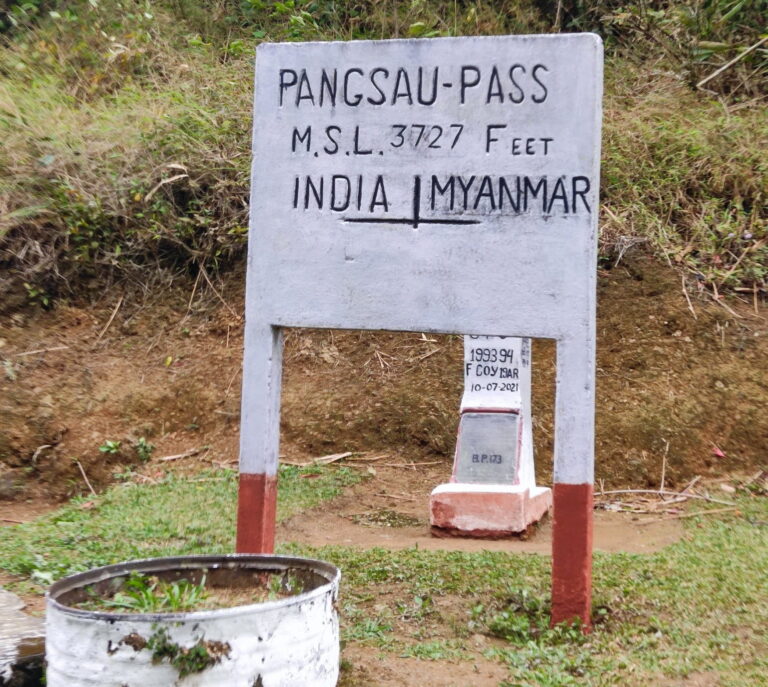
Shubhanginee Singh has published the article “Possibilities for Peaceful Borders: Territory, Mobility, and Everyday Borderwork” in the Oxford University Press volume Border Intersections. She explores how peace at borders is actively produced rather than simply given, even where there is no militarized conflict. Drawing on a comparative ethnography of the India-Bhutan border (Lumla) and the India-Myanmar border (Nampong) in Arunachal Pradesh, she examines three mechanisms at work to shape the conditions of peace at borders: how mobility routes are arranged in space, how access to the border is bureaucratically differentiated, and how crossings are controlled in time. The article examines how such borders, though vulnerable to shifting security policies and regional power dynamics, continue to be reproduced through the adaptive borderwork of local communities. It also asks why ethnically linked communities with similar practices can experience very different peace at different sites.
Full article at: https://doi.org/10.1093/9780198945222.003.0009