By Madiha Tariq & Pradyun Patra
Introduction
Myanmar shares a 1643 km border with India, separating the Indian states of Mizoram, Manipur, Nagaland, and Arunachal Pradesh from Myanmar’s Sagaing region, and Chin and Kachin states. Among these, the Zomi form an ethnic group that originally belongs to the border region between Mizoram, India and the Chin State in Myanmar. They share close cultural and kinship ties with Mizos, as well as other members of the Zo ethnic group like Kukis and Hmars. Historically, this border has been a porous one, facilitated especially by the cordial relationship between India and the older Myanmar regimes as well as the warm local cultural ties. The Free Movement Regime (FMR) established in 1968 facilitated movement of people and informal trade of goods such as rice, betel nut, liquor and bamboo across the unfenced border.[1] People also frequented daily for healthcare and livelihood.
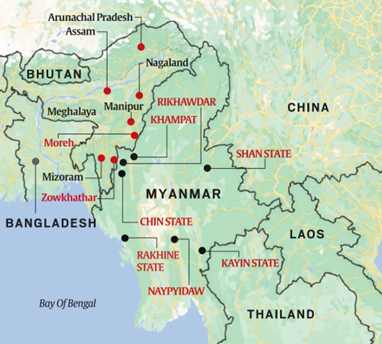
Figure 1: A Map showing the India-Myanmar Border Region
[Source: Daniel K. Inouye Asia-Pacific Center for Security Studies]
However, decades of military rule and ethnic conflict have driven successive waves of displacement across this border. According to Operational Data Portal, around 61,300 refugees from Myanmar have arrived in India since the February 2021 coup alone. Chin State — one of Myanmar’s least developed regions due to poor infrastructure, geographical isolation and governmental neglect amidst a highly agrarian society—has faced particularly severe persecution under the Military junta. The Chin Human Rights Organisation estimates the figure to be even higher, suggesting that as many as 800,000 people have been forced to seek refuge in India as a result. Regardless of the precise numbers, it is evident that each regional crises prompt renewed cross-border movement, with several groups—including the predominantly Christian Zomis from Buddhist-majority Myanmar—seeking refuge in Mizoram, Manipur, and at times New Delhi, particularly among those hoping to eventually migrate further West. Crucially, these migrations unfold against the backdrop of New Delhi’s ambivalent refugee policy.
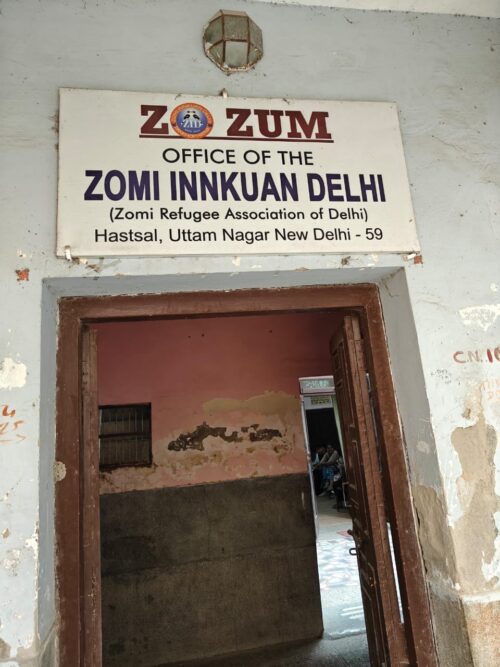
For a class on Borders, Citizenship and Belonging taught by Professor Swargajyoti Gohain, we conducted a field visit to one such Zomi refugee settlement in Uttam Nagar, New Delhi on the 25th of October, 2025. This matters because the conditions of our institutional belonging were legible to the people we spoke with even before we introduced ourselves. With little prior engagement with the Zomi refugees beyond the limited and dated literature available, we sat in the Zomi Community Association office on chairs brought out for us, and left as the day progressed, back to our worlds. It is this undramatic ease of our departure that we find ourselves returning to as we write. Alongside a detailed account of the community’s everyday life in Delhi, we use what follows as this article to reflect on the possibilities and limitations of ethical research in contexts of structural disadvantage. We grapple with what our positionalities make available to us, what they foreclose, and whether a reflexive disposition can do any meaningful work in a field such as this.
Figure 2: Entryway to the Zomi Community Association Office
Leaving Home
People spoke of their journeys from villages in Chin state, Myanmar to New Delhi in several waves: in 1988, through the early 2000s, in 2019 and after 2021, as new people continue to arrive. A man recounted the story of how most of them arrived, through the border in Northeast India, to either Mizoram or Manipur, where they used church networks or informal connections to reach Guwahati. From Guwahati, they traveled via train to Delhi, where the UNHCR office is.
In response to the coup by the Junta, the preceding National Unity Government of Myanmar formed the People’s Defence Force (PDF) as an armed resistance against military rule. In our conversations too, military aggression and fears of PDF conscription were cited as the primary reasons for migration. “They say they will conscript men aged 18 to 35, but really they just grab anyone.” In 2025, the PDF in Falam city clashed with the Junta, which led to one of our interlocutors fleeing.
A woman with a dependent husband recounted the violence of the PDF, mentioning that they searched her house, looking for her adolescent son, which ultimately led them to flee. She acknowledged support from the church for her and her son’s safe exit from her village to Lamka in Manipur. It appears that the church acts as an informal system for protection and cross-border movement in the absence of a reliable state. Her movement across the border did not depend on the permission of law, but on the law’s temporary pause. Two other interlocutors similarly spoke of crossing the Tiau river into Mizoram in the middle of the night (one with a newborn child). Avoiding armed guards, one crosses the river by going through it directly instead of using the bridge. It’s a route fraught with risk.
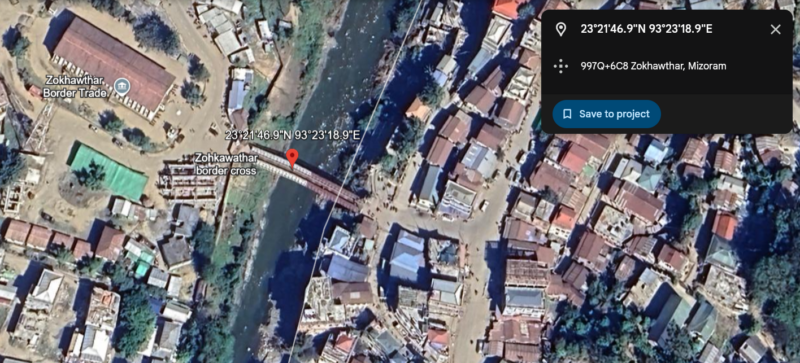
Figure 3: The location of “Tiau bridge” between Myanmar’s Falam district and Mizoram, on the Tiau (or Tyao) river, which forms the border here.
[Source: Google Earth, Image data provided by Airbus in December 2023]
Life Without Papers
Zomi struggles do not end at the international, cartographic border between Myanmar and India. The crossing invites new difficulties and inaugurates newer forms of uncertainty structured by internal cultural bordering. The refugees we met told us in length about multiple incidents of workplace discrimination wherein they were denied timely salaries even when Indian workers got theirs. They spoke of fights that occasionally break out when racial slurs are used against them; they are frequently referred to as “Nepali” or “Chinese” derogatorily. In this sense, exclusion is not afforded by refugee status as a juridical category but institutionalised socially and economically through racialised labour relations, linguistic marking, and the continual policing of belonging in everyday life. Therefore, apart from an injury to the individual’s dignity, it works structurally to position Zomi refugees as racially and culturally foreign within the social body, reproducing internal borders through everyday practices of othering.
Another interlocutor, for example, mentioned that her husband is wheelchair-bound and frequently requires medical care, but was recently denied access to a government hospital due to their refugee status. Another man recounted a time when his son was very ill and the doctor at a government hospital prescribed seven tests, but the hospital conducted only two. Staff told the family it was lunch break, even though they continued treating Indian patients.
Unfortunately, the children have it no better. Even though they have the right to government school education (which they access via the UNHCR), the Indian students frequently fight refugee students and mock them over racial and linguistic differences. The UNHCR workers occasionally try to mitigate such situations, but clearly the differences remain. Importantly, several of our interlocutors, including our interpreter Kim mentioned that until 2024, refugees could attend university such as the Indira Gandhi National Open University (IGNOU) for distance education, but since 2025 (for unclear reasons) they are unable to.
Yet, none of these are extraordinary crises for them. They are familiar, everyday experiences in their engagement with public institutions in Delhi. Importantly, such denial of human rights is not overt either. It operates under the guise of a documentation crisis. Refugee and asylum-seeker cards issued by the UNHCR function as provisional proofs of identity, yet they do not replace Indian identification such as Aadhaar or passports. Aadhar cards are a system of unique biometric IDs issued by the Government of India and serve as a proof of residence in India (not as a proof of citizenship). Aadhar was launched in 2009, and today nearly all residents of the country have an Aadhar, except for most refugees in the country. The distinction between refugee cards issued to earlier arrivals and asylum-seeker cards given to more recent migrants further fragments access to long-term planning around resettlement prospects. Refugees who arrived before 2021 typically hold refugee cards while others have asylum-seeker status, with reportedly fewer benefits.
The two genres of cards look deceptively similar. Although neither document confers formal legal status under Indian law, refugee card holders are recognised by UNHCR as having passed refugee status determination and enjoy comparatively greater access to UNHCR assistance, protection interventions, and consideration for resettlement pathways. Asylum-seeker card holders, by contrast, remain in a limbo of pending recognition, with more uncertain access to assistance and weaker documentary standing in encounters with institutions and authorities. Our interlocutors suggested that refugee card holders are afforded relative precedence in accessing the already scarce healthcare services and limited UNHCR financial assistance, such that even within conditions of shared displacement, minor documentary distinctions generate meaningful gradations in vulnerability and support.
In fact, some also recalled being asked for large sums of money during interactions with the Foreigners Regional Registration Office, leaving them unsure whether these were official fees or acts of extortion. Thus, legal fragility has turned even statutory codes and frameworks into an unpredictable negotiation with the state.
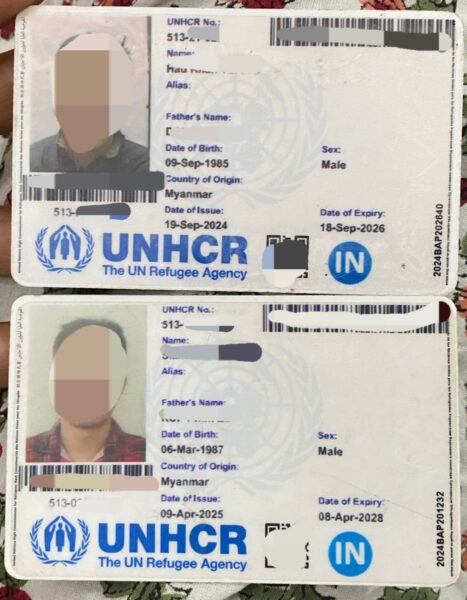
Figures 4 and 5: Images of the UN Refugee Card and Asylum Seeker Card
The Limits of Recognition
India’s refusal to sign the 1951 Refugee Convention and the absence of a national refugee law frames much of this experience. In 1951, the reasons given for Indian’s non-signing of Refugee convention were that of security concerns due to India’s recent partition and its porous borders. Having arrived in Northeast India where they have cultural and ethnic affinities, and also from where most of them enter the country, some like the Zomis in Uttam Nagar migrate to the national capital in the next few months. Living in Delhi gives them access to the United Nations High Commissioner for Refugees (UNHCR) Office, which despite its offers of limited documentation is, nevertheless, necessary for qualifying for the exit permit to third nations such as Australia, the United States of America, and Norway, which have signed the 1951 Refugee Convention.
Even though the eligibility criteria for an Aadhaar card in India is just to reside in the country for 182 days or more in the 12 months immediately preceding the enrolment application, none of our Zomi Refugee interlocutors in Uttam Nagar have been issued Aadhaar cards, despite some members having lived here since 1988. Without Indian identification proofs, entry into formal labour markets becomes difficult, pushing many toward informal work where wages are delayed and protections are limited. Educational pathways narrow in similar ways. Without recognised Indian identification, many adults work in informal jobs—domestic work, rag picking and sales assistance—where delayed wages and workplace exploitation are common because legal recourse remains limited.
The result is a form of protection that is usually helpful to sustain life, but largely insufficient to secure stability of any kind. Rather than approaching police or state offices, residents often resolve disputes internally through the Zomi Association or through humanitarian channels such as BOSCO-UNHCR. Community leaders mediate workplace conflicts or school disputes and help families navigate bureaucratic processes with the UNHCR. Everyday life continues through these parallel infrastructures, even as formal institutions remain distant or inaccessible. In other words, governance happens through the state’s absence unlike its penetrable presence in other communities.
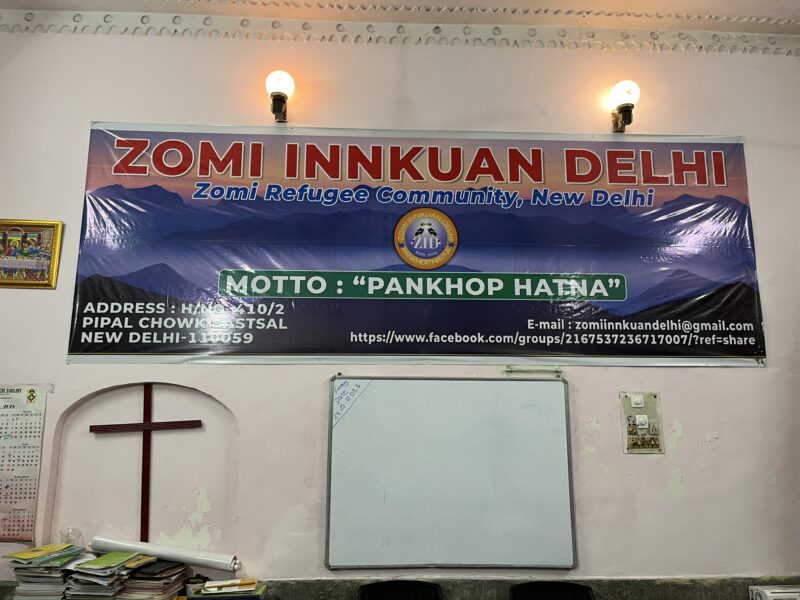
Figure 6: An Image of the Zomi Community Association Office where we were received by the President and our interpreter, Kim.
The Work of Waiting
Hence, while many refugees flee acute violence in the Chin State, life in Delhi is shaped less by immediate crisis than by a slow negotiation with documentation regimes, public institutions, labour markets and everyday amenities that remain only partially accessible. Legal ambiguity places everyday decisions such as seeking medical care, enrolling in school or even pursuing work within a landscape of unpredictability.
These conditions produce a sort of suspended belonging. Church networks facilitate migration and protection, while local associations mediate disputes and bureaucratic interactions in the absence of reliable state support. These arrangements allow life to continue, but rarely allow long-term stability. The settlement is a telling example of how contemporary borders are maintained through administrative practices that shape mobility and belonging long after the physical crossing has taken place.
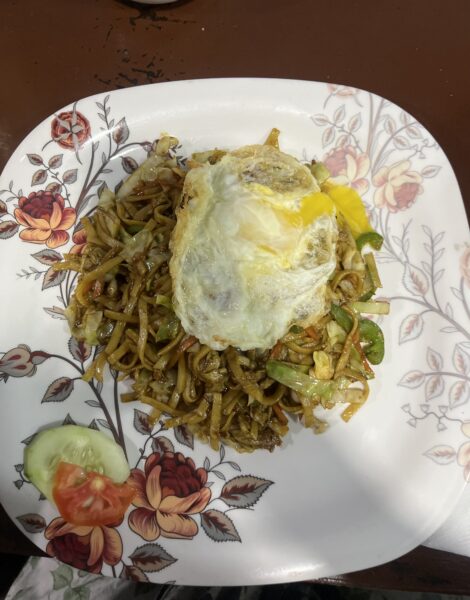
Figure 7: A meal at a small, local Burmese restaurant near the Zomi settlement in Uttam Nagar.
Yet attending to these dynamics also demands, beyond rigorous attempts to study refugee communities in their own right, a reflexivity about the unequal positionalities through which such borders are studied. As a team of students motivated by, at its barest, a course to visit the Zomis, we moved constantly between university classrooms and the precarious Zomi settlement. At the same time, the people we talked to navigated a landscape of waiting; waiting for a lost home, for permissions that may or may not arrive. When we entered this space, our own mobility and institutional belonging remained thickly present in the background. While we were able to enter the settlement, ask questions, and leave, the people we spoke with continued to live within the conditions we were only briefly observing. Recognising this gap is important because it reminds us that any study of borders is itself shaped by unequal relationships to mobility, citizenship and (often institutional) belonging. The capacity to cross into and out of spaces of precarity, to convert others’ experiences into knowledge capable of narration reflects forms of privilege that are inseparable from what we colloquially call the research encounter. Border(land) ethnography, then, must remain attentive not only to the lives structured by bordering practices, but also to the epistemic conditions under which those lives come to become objects of study. To study borders critically requires confronting how the production of knowledge about displacement is in turn entangled in asymmetries of movement and recognition.
Madiha Tariq & Pradyun Patra are in the Department of Sociology and Anthropology at Ashoka University, Sonepat, India.
This article draws on collaborative fieldwork and discussions with fellow students. We are grateful to Ananya Kakar, Kriti Atwal, Mohd. Nagib Mehfuz Bin Daula, Radha Khare, Shalini Bhaiya, and Shubhika Khanna for their contributions through observations and insights that informed this work. We thank Dr. Swargajyoti Gohain for guiding this fieldwork, facilitating our engagement with the Zomis and for offering thoughtful feedback on earlier drafts. We are also grateful to the peer reviewers for their generous critique and careful engagement with the work.
[1] While the FMR was officially scrapped by the Indian government in 2024 on account of threats to internal security, the cross-border movement has been regulated, rather than halted completely, by a new QR-enabled border-pass system along with the construction of a physical fence aimed to cover the entire 1643 km stretch.